
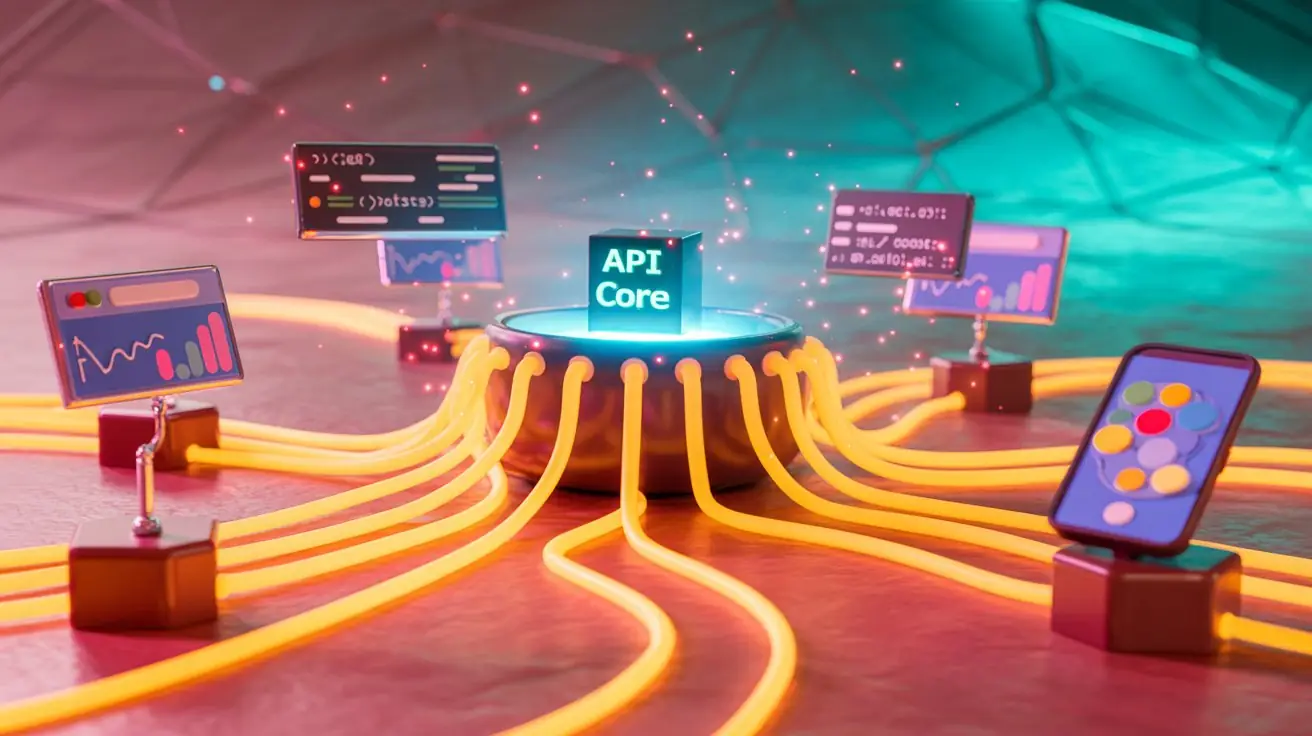
The MLM industry is shifting from rigid, monolithic systems to flexible, data-driven environments. Today’s distributors demand real-time insights, while companies require seamless integration with global tools. API-first architecture isn’t just a technical choice—it’s a business necessity for modern network marketing brands aiming for global scale.
💡 Core Definition: API-first architecture means designing your software’s communication protocols (APIs) before the visual interface. This ensures that every function—from commission calculation to lead management—is a modular tool that can connect to any device or third-party service.
Traditional “all-in-one” MLM software often becomes a “black box.” When you want to add a new payment gateway, a CRM like HubSpot, or a mobile app, legacy systems require expensive, messy custom coding. This leads to technical debt and slow deployment cycles.
Handle millions of transactions and complex genealogy trees (Binary, Matrix, Unilevel) without slowing down the user experience.
One backend serves your web portal, native iOS/Android apps, and even smart-watch notifications simultaneously.
Instant commission updates and live sales tracking ensure transparency and boost distributor retention.
In an API-centric world, security is baked into every layer. Modern architecture utilizes OAuth 2.0 and JWT (JSON Web Tokens) to ensure that sensitive financial and personal data are only accessible to authorized users. This makes achieving GDPR, CCPA, and PCI-DSS compliance significantly more manageable.
Q1: How does API-first architecture prevent “thin content” issues?
By providing deep technical insights and modular explanations rather than generic marketing fluff, you provide “Helpful Content” that search engines prioritize for indexing.
Q2: Can I migrate my existing MLM software to an API-first model?
Yes. Many companies use a “Strangler Pattern” where they slowly build new features as APIs while gradually phasing out the old monolithic core.
Q3: Is API-first architecture more expensive to build?
While the initial design phase may take longer, the long-term savings in maintenance, integration costs, and scalability far outweigh the early investment.
Q4: Does this architecture improve mobile app performance?
Absolutely. Because the app only requests the specific data it needs through the API, it consumes less battery and loads significantly faster than web-view apps.