
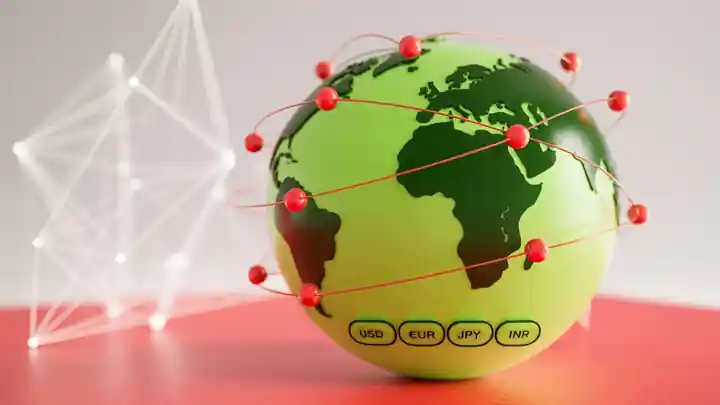
Scaling across borders requires more than just a vision—it requires a technical foundation that understands the world.
The dream of every Multi-Level Marketing (MLM) founder is limitless scalability. In today’s interconnected economy, confining your business to a single country or currency is leaving money on the table. However, transitioning from a domestic operation to a global powerhouse is a move fraught with technical challenges. From language nuances to complex international tax laws, the hurdles are significant.
As we head into 2026, the standard for “Global MLM” has been raised. It is no longer enough to simply offer a translated website. You must provide a localized experience that removes every possible friction point for a distributor in Tokyo, London, or Lagos. This guide dives deep into why Multi-Language, Multi-Currency, and high-tier UX are the three pillars of international expansion.
Many MLM platforms make the mistake of using automated browser-based translation. While this might help a user understand the “gist” of a page, it destroys professional credibility. In network marketing, trust is the primary currency. If your compensation plan terms are poorly translated, distributors will fear they won’t be paid correctly.
True localization involves “Cultural Context.” For example, the way you describe a “Binary Spillover” or “Unilevel Matching Bonus” must be consistent with local industry jargon. Furthermore, your software must support Right-to-Left (RTL) scripts for markets like the Middle East. Without native RTL support, your layout will break, making the user experience frustrating and unprofessional.
💡 Expert Insight: A global-first platform allows you to manage “Language Strings” at the administrative level, ensuring that marketing slogans remain impactful across different cultures.
Managing money across borders is the most complex part of a global MLM. A “Best-in-Class” software must handle more than just simple conversion; it must manage a Fixed Exchange Rate vs. Live Market Rate strategy. Many MLM companies prefer fixed rates for their “Point Value” (PV) to keep the compensation plan stable, even when the local currency fluctuates.
Furthermore, you must consider the payout ecosystem. In some regions, distributors don’t have traditional bank accounts but rely heavily on mobile money (like M-Pesa) or Cryptocurrency (USDT). Your software should act as a central hub that connects to:
In many of the world’s fastest-growing MLM markets, such as India, Nigeria, and Brazil, the majority of your distributors will never use a desktop computer. They will build their entire empire from a smartphone. This is where User Experience (UX) becomes a make-or-break factor.
A global UX must be “lightweight.” High-resolution images and heavy scripts might look great in an office in New York, but they will fail to load on a 3G connection in a rural village. Your software must utilize Progressive Web App (PWA) technology or optimized mobile architectures that cache data locally. If your back office is slow, your distributors will lose sales. Speed is a feature, and in global MLM, speed is also a retention strategy.
Every country has its own set of rules regarding “Earnings Disclosures” and “Product Claims.” A robust global MLM platform allows the corporate team to set Region-Specific Dashboards. This means you can show a specific legal disclaimer to users in the United States while showing a different set of product certifications to users in Europe.
Centralized control with decentralized execution is the goal. You want one main database, but the ability to toggle features on or off depending on the user’s location. This level of granularity prevents the “all-or-nothing” approach that often leads to legal trouble during international expansion.
When expanding globally, many founders try to “patch” their existing local software to work in new countries. This almost always leads to data corruption, payout errors, and a tarnished brand. Investing in a Multi-Language, Multi-Currency platform from day one is not an expense—it is insurance for your global growth.
By removing the barriers of language, simplifying the complexity of currency, and prioritizing a mobile-first UX, you give your distributors the tools they need to succeed in any corner of the globe. The world is waiting for your products; make sure your technology is ready to greet them.
We provide the most robust Multi-Language & Multi-Currency solutions in the industry. Let’s talk about your expansion plans.
1. How does Multi-Currency software handle exchange rate fluctuations?
Top-tier software allows you to set a “Fixed Internal Exchange Rate” for your Point Value (PV). This ensures that a product worth 100 PV remains consistent globally, protecting your commission payouts from daily market volatility.
2. Is it possible to have different compensation plans for different countries?
Yes. Advanced global platforms allow you to configure regional sub-plans. This is often necessary to comply with local laws, such as specific retail requirements in the US or payout caps in certain Asian markets.
3. Does the software support Right-to-Left (RTL) languages like Arabic?
Yes, a professional global MLM system must have native RTL CSS support. This ensures that the entire user interface, including navigation menus and genealogy trees, flips correctly for a natural reading experience.
4. How are global shipping and logistics integrated?
The software integrates with global carriers (like FedEx, DHL, or local 3PL providers) via API. It automatically calculates shipping costs, customs duties, and tracking info based on the user’s localized warehouse.
5. What is the best way to pay international distributors?
While bank wires are slow, the best systems use E-Wallets or Cryptocurrency (USDT). This allows for instant “Wallet-to-Wallet” transfers, significantly reducing fees and wait times for your global sales force.
6. How does the system manage VAT, GST, and Sales Tax?
The platform uses a geo-location engine to identify the buyer’s tax jurisdiction. It then applies the appropriate VAT or GST percentage to the order total, ensuring your company remains tax-compliant in every region.
7. Can I restrict certain products from being sold in specific countries?
Absolutely. You can set “Regional Product Visibility.” This is crucial when certain supplements or ingredients are approved in one country but restricted in another due to local health regulations.
8. What is “Dynamic Localization” in MLM software?
Dynamic localization goes beyond text translation; it adjusts date formats, currency symbols, and even marketing imagery to suit the cultural preferences of the user’s specific region.
9. Is the back office mobile-optimized for developing markets?
Yes. In many regions, mobile is the only way to access the internet. Global MLM software must use responsive design or a Progressive Web App (PWA) to ensure fast loading on 3G and 4G networks.
10. How does a global system prevent “Internal Consumption” issues?
The software tracks “Retail vs. Personal” sales ratios. This helps you monitor compliance with global anti-pyramid laws, ensuring that a healthy percentage of revenue comes from outside customers rather than just internal recruitment.