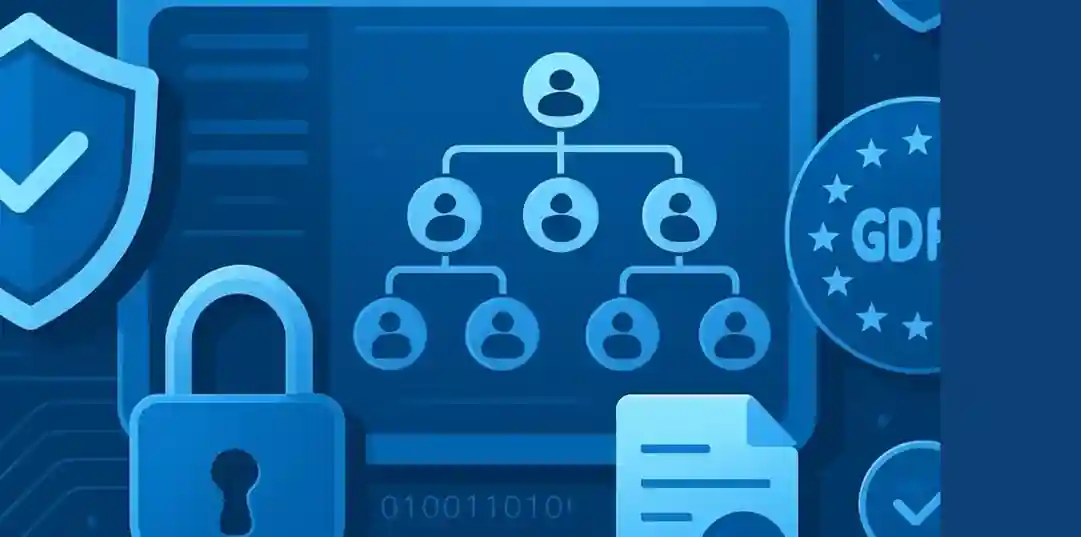
Building GDPR-compliant MLM software starts with designing systems that treat personal data as a regulated asset—not an afterthought. That means embedding security, transparency, and user-centric controls directly into your platform’s architecture. For MLM companies operating in or serving the EU, GDPR compliance isn’t optional; it’s the foundation for sustainable growth, reduced legal exposure, and long-term trust from distributors and customers.
Why GDPR Matters in the MLM Industry?
MLM organizations handle unusually broad sets of personal data—names, financial records, ID documentation, genealogy data, payout histories, and cross-network interactions. The more relationships and downline connections a company manages, the more sensitive the data surface becomes.
GDPR places strict obligations on how this data is collected, processed, stored, and shared. For global MLM brands, failing to comply can trigger severe penalties (up to 4% of annual global revenue), operational disruptions, and irreversible damage to distributor trust.
But GDPR isn’t just a legal hurdle. It’s a competitive advantage.
MLM companies that demonstrate data accountability gain stronger distributor loyalty, higher system adoption, and smoother market expansion. The result: a more resilient business model where security and privacy elevate—not restrict—growth.
Key Strategies for Building GDPR-Compliant MLM Software
Below are four high-impact pillars that ensure your MLM platform meets GDPR standards while supporting scalability, automation, and global operations.
1. Data Minimization and Purpose-Driven Collection
Collect only the data you genuinely need—and document why you need it.
MLM platforms traditionally gather extensive user information to support KYC, commissions, genealogy structures, and bonus calculations. But GDPR requires that every field has a clearly defined purpose.
Best practices:
Map each form field to a specific business need (e.g., IBAN for automated payouts).
Use tiered data collection: collect minimal info at signup; request sensitive data only when needed.
If the system stores ID verification data for distributor onboarding, GDPR expects:
a documented purpose (identity verification)
a specified retention period (e.g., 12 months post-termination)
restricted access (e.g., compliance team only)
This prevents “data hoarding,” one of the most common compliance violations in legacy MLM systems.
2. Robust Consent Management and Transparent Privacy Controls
GDPR requires explicit, informed consent—not pre-checked boxes or vague privacy statements. Your MLM software should allow users to control how their information is used at every stage.
Must-have features:
Granular consent options for marketing, analytics, and communication preferences.
Dynamic consent logs that track when and how agreements were updated.
Editable privacy settings, allowing distributors to change preferences anytime.
Automated consent prompts when new features involve additional data processing.
How this improves MLM operations?
Clear consent strengthens distributor trust and reduces support tickets related to unwanted promotional messaging. It also enables companies to run hyper-targeted, fully compliant marketing campaigns without risking penalties.
3. Encryption, Access Control, and Data Protection by Design
The MLM ecosystem is highly interconnected. Data flows between distributors, upline sponsors, customer portals, finance systems, warehouses, and support teams. Each connection is a potential vulnerability.
A GDPR-aligned MLM platform must enforce security by design, meaning the architecture itself prevents unauthorized access.
Core security components:
End-to-end encryption for personal and financial data.
Role-based access control (RBAC) ensuring users see only the data they are permitted to see.
Zero-trust authentication to verify every access request.
Audit trails that record logins, data exports, and modifications.
Annual penetration testing and vulnerability assessments.
Example:
When a distributor accesses their downline genealogy tree, GDPR requires that the platform exposes only the information necessary for business operations—not full personal profiles. RBAC ensures field-level visibility is strictly controlled.
4. Automated Data Retention, Right-to-Be-Forgotten, and Data Portability
One of the most challenging aspects of GDPR for MLM companies is operationalizing user rights in platforms that handle thousands—or millions—of accounts.
Your MLM software must automate these rights:
Right to Erasure (Right-to-Be-Forgotten)
Users can request deletion of their personal data.
The software must:
Remove personal data while preserving essential business records (e.g., anonymizing past transactions).
Trigger workflow notifications to compliance teams.
Log the deletion process for audit purposes.
Right to Data Portability
Users must be able to receive their personal data in a standard, machine-readable format.
Your system should export:
profile data
compensation records
transaction history
downline interactions (where legally permissible)
Automated Retention Policies
GDPR expects predefined, automated data expiration.
MLM software should:
auto-purge inactive accounts after a defined period
anonymize historical records for commissions
remove outdated documents such as ID uploads
This reduces liability and frees storage resources without manual intervention.
How Technology and MLM Software Enable GDPR Compliance?
Modern MLM platforms rely on automation, cloud security, and modular architecture to meet GDPR requirements efficiently. This is where Prime MLM Software excels—privacy features are not “added on,” but built into the core system.
Key technical enablers:
Microservice Architecture Segregating personal data into modular services reduces data exposure and simplifies access controls.
Automated Compliance Workflows Prime MLM Software includes automated consent tracking, data retention timers, and deletion workflows—reducing manual workloads for compliance teams.
Advanced Encryption Framework All sensitive fields use AES-256 encryption at rest and TLS 1.3 in transit, ensuring end-to-end protection.
Multi-Region Cloud Deployment Data can be stored within EU boundaries, supporting GDPR’s geographic requirements.
Secure API Gateways Only authorized systems and integrations can request data, protecting against unauthorized third-party access.
These technologies collectively enable MLM companies to scale confidently across global markets without risking data privacy violations.
Future-Ready Takeaway
MLM companies that embed GDPR compliance into their software architecture gain more than just legal protection—they build a resilient foundation for long-term global expansion. By prioritizing minimal data collection, strong consent frameworks, automated user rights, and enterprise-grade security, your organization strengthens trust and operational efficiency. The next wave of MLM growth will favor brands that treat privacy as a strategic advantage, not a regulatory burden.
We use cookies to improve your experience and analyze our traffic. By clicking "Accept All", you consent to our use of cookies. Learn more in our Privacy Policy.