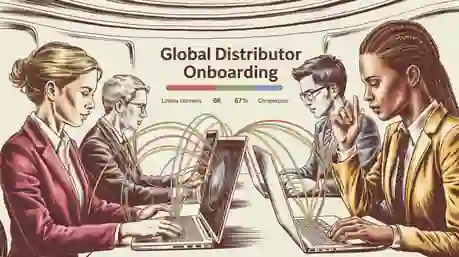
In network marketing, the first few weeks after distributor registration often determine long-term success. Many MLM businesses invest heavily in recruitment but struggle with onboarding inefficiencies that lead to inactivity, low engagement, and high dropout rates.
At Prime MLM Software, we worked with several fast-growing MLM and direct selling companies that faced major onboarding challenges as their distributor networks expanded globally. These businesses needed a smarter, scalable onboarding system that could guide distributors consistently while reducing manual operational dependency.
This case analysis explains how we implemented AI-driven onboarding strategies that improved distributor activation, training completion, and early-stage engagement across multiple client networks.
The Challenge
Most of the clients we worked with were facing similar onboarding problems:
Inconsistent distributor training
Slow onboarding workflows
High inactivity during the first 30 days
Delayed KYC and verification processes
Lack of onboarding progress tracking
Heavy dependency on uplines for training
Poor distributor engagement across multiple regions
High dropout rates among new recruits
Many onboarding processes were still heavily manual. New distributors had to wait for approvals, depend on uplines for guidance, and navigate complex compensation structures without structured support.
As distributor networks expanded internationally, these inefficiencies became even harder to manage at scale. Several clients reported that new distributors were becoming inactive before completing their first sales activity.
Our Objective
The primary goal was to build an intelligent onboarding ecosystem that could:
Rather than creating another static onboarding flow, we focused on building adaptive onboarding systems powered by AI-driven automation and analytics.
Our AI-Driven Onboarding Strategy
1. Automating Distributor Verification and Registration
One of the biggest delays in onboarding came from manual KYC verification and document handling. To solve this, we implemented:
Automated distributor registration workflows
AI-assisted document verification
Digital onboarding forms
Automated approval routing
Compliance validation systems
2. Personalized Learning and Adaptive Training
Traditional MLM onboarding often pushes every distributor through the same generic training process. Instead, we helped clients implement adaptive onboarding systems that customized learning paths based on:
Distributor activity and experience level
Engagement behavior and learning progress
Geographic region and preferred training formats
3. AI-Powered Chat Assistance for New Distributors
To reduce support dependency across different time zones, we introduced:
AI onboarding chat assistants for instant guidance
Automated FAQ handling and compensation plan explanations
Product recommendation assistance and multilingual support
4. Predictive Analytics for Early Distributor Engagement
We built systems capable of identifying distributors who were at risk of becoming inactive by analyzing login behavior, training completion rates, and dashboard interaction patterns. When risks were detected, automated workflows triggered:
Follow-up reminders and mentor notifications
Personalized training prompts and re-engagement campaigns
5. Gamified Onboarding Experiences
To improve participation, we implemented features including:
Progress milestones and achievement badges
Activity rewards and rank-based onboarding goals
Interactive onboarding dashboards
Infrastructure Improvements
Our implementation included a robust technical foundation:
Automated workflow engines and API-based integrations
Results Achieved Across Client Networks
Key Outcomes Included:
Metric
Impact
Onboarding Speed
Faster completion and reduced delays
Engagement
Higher training engagement and activation rates
Operations
Reduced support workload and better visibility
Retention
Improved first-month activity and higher retention
Industry Insight
The MLM industry is rapidly shifting toward automation and predictive analytics. Modern distributors expect digital-first platforms—instant access, personalized guidance, and real-time assistance. As businesses scale globally, traditional onboarding methods are becoming increasingly difficult to sustain.
We use cookies to improve your experience and analyze our traffic. By clicking "Accept All", you consent to our use of cookies. Learn more in our Privacy Policy.